Fire protection businesses are easy to manage when you’ve got a small crew. Five technicians, a handful of sites, and most of the work still flows through you. You know what’s happening, who’s where, and what needs to get done next.
But somewhere between 8 and 12 technicians, things start to shift.
Scheduling stops being simple. Jobs get missed or double-booked. Technicians are waiting on instructions. Office admin starts to take longer than the actual field work. And suddenly, what used to feel manageable starts to feel chaotic.
That’s usually the point where growth stops feeling smooth and starts exposing the limits of your systems.
Scaling a fire protection business from 5 to 50 technicians isn’t just about hiring more people. It’s about changing how the business runs day to day.
What changes as a fire protection business grows
At different stages of growth, the business naturally shifts.
Around 5 technicians
Most owners are still deeply involved in operations:
- Scheduling is handled manually
- Jobs are tracked through calls, texts, or spreadsheets
- The owner is still the main dispatcher and problem solver
At this stage, it works because volume is still low.
Around 10 technicians
This is where strain starts to show:
- Scheduling becomes harder to coordinate manually
- Recurring inspections and service calls start overlapping
- Communication gaps increase between office and field
This is usually when a fire protection service management software system starts becoming necessary, even if the business is still on the smaller size.
20+ technicians
At this stage, structure and software stop being optional. :
- Dedicated office/admin roles are usually required
- Job tracking needs to be centralized
- Reporting, compliance, and scheduling can’t rely on memory or spreadsheets
Why scaling breaks spreadsheets and phone-based scheduling
Most fire protection companies don’t fail to scale because of demand, they often fail because operations don’t keep up and cracks start to show.
Common breakdown points include:
- Recurring inspections getting missed or duplicated
- Technicians double-booked across multiple sites
- Lack of visibility over job status in real time
- No reliable record of completed work or deficiencies
- Too much time spent coordinating instead of dispatching
At a small scale, phone calls and spreadsheets are enough. At a larger scale, they become a bottleneck.
Hiring challenges in the US fire protection industry
Growing a fire protection business depends just as much on having the right people as it does on winning new work. In the US market, hiring skilled technicians isn’t always straightforward, and most companies feel those challenges as they grow.
Across the US fire protection industry, businesses often face:
- NICET certification requirements for technicians
- State-by-state licensing differences
- A shortage of experienced fire protection techs
- Reliance on apprenticeship pipelines to build skill over time
As teams grow, retention becomes just as important as hiring:
- Clear pay progression helps keep technicians
- Consistent training builds long-term capability
- Predictable scheduling improves job satisfaction
- Strong field-to-office communication reduces frustration
By the time a business reaches 15–20 technicians, hiring usually shifts from reactive to structured workforce planning.
What scaling actually requires from your systems
To scale from 5 to 50 technicians, the system underneath the business has to evolve.
A fire protection business software system needs to support:
- Recurring inspection scheduling
- Real-time technician visibility
- Job allocation and dispatch
- Mobile reporting from the field
- Asset and service history tracking
- Deficiency capture and follow-up workflows
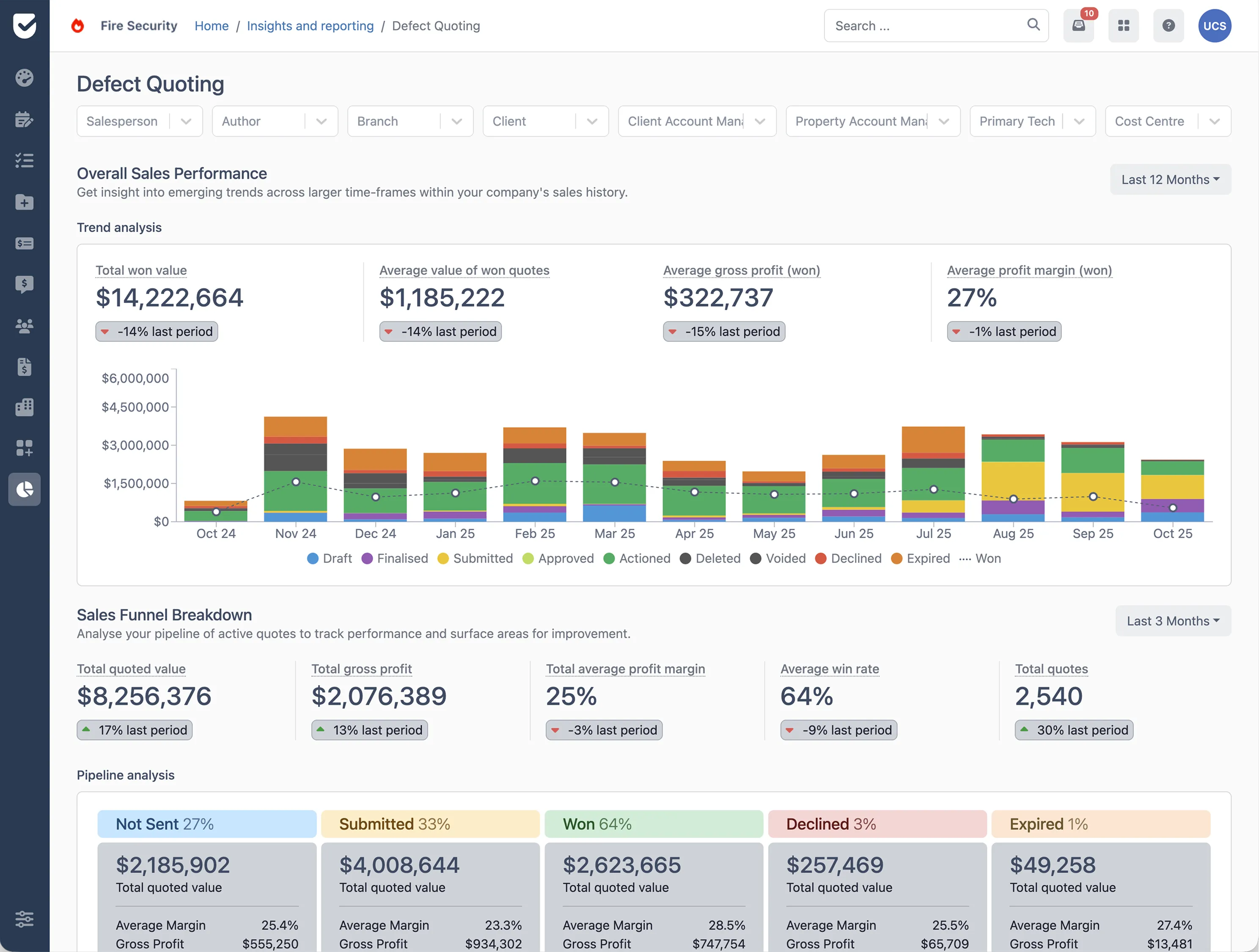
Uptick brings scheduling, field workflows, asset tracking, and reporting into one connected system designed for fire protection operations.
Is your system ready to scale?
Before adding more technicians, look at how your current systems handle the pressure. What works for a small team often starts to break once job volume, sites, and technicians increase.
A useful question to ask is:
Can your team clearly see what’s scheduled, what’s in progress, and what’s completed, without relying on spreadsheets, group chats, or manual follow-ups?
If the answer is no, it may be a sign your systems need to evolve before your team does. See how Uptick could support your next stage of growth, book a demo today.