TL;DR:
Recurring inspection contracts are the backbone of fire protection revenue. They are won through fast, professional, accurately priced agreements, and retained through consistent delivery, including reliable scheduling, timely inspections, clear reporting, strong communication, and effective follow-up made easier by fire protection service software such as Uptick.
Most fire protection companies know the value of recurring service contracts. They create predictable revenue and generate ongoing inspection, testing, maintenance, and deficiency work throughout the year. While winning a contract is important, keeping it is where the real value lies.
Customers rarely leave because of a single mistake. More often, contracts are lost because of small issues that build up over time. As businesses grow, managing these recurring obligations becomes more difficult, especially when teams are relying on more outdated manual efforts. This is often where fire protection service management software starts to play a much bigger role.
In this article, we'll explore how growing fire protection companies use software to manage recurring inspections, improve scheduling, strengthen customer relationships, and create more reliable service delivery. We'll also look at how the right systems can help win new contracts, improve retention, and support business growth.
Why recurring service contracts matter
For many fire protection businesses, recurring inspections and maintenance agreements form the backbone of the company. Unlike one-off project work, service agreements provide a steady stream of scheduled revenue throughout the year.
The value of a contract extends far beyond the initial agreement. A well-managed service customer can generate years of recurring revenue while also providing opportunities for growth across multiple locations and systems. This is why retaining contracts is often just as important as winning new ones.
The operational issues that put contracts at risk
Most contract losses do not happen because a competitor offered a slightly lower price. Instead, they happen because customers lose confidence in how businesses do things.
Common issues include:
- Missed recurring inspections
- Scheduling conflicts
- Delayed inspection reports
- Poor communication with customers
- Incomplete inspection records
- Limited visibility across multiple sites
- Slow follow-up on deficiencies
These problems often start appearing as teams grow and manual systems become harder to manage. What works for five technicians does not always work for twenty.
How fire protection software helps retain service contracts
Winning a service agreement is one thing. Delivering on it year after year is another.
As inspection volumes grow, often retaining contracts becomes an operational challenge rather than a sales one. Customers expect inspections to happen on time, reports to arrive promptly, and any deficiencies to be followed up quickly.
This is where fire protection scheduling software becomes critical.
Never miss recurring inspections
Missed inspections are one of the quickest ways to damage customer confidence.
Purpose-built fire protection service software helps automate recurring schedules and provides visibility into upcoming work, reducing reliance on spreadsheets, calendars, and manual reminders. Instead of relying on someone to remember what is due next month, the system helps ensure recurring inspections stay on track.
Improve customer communication
Customers want visibility into the work being completed across their sites. Having access to inspection records, reports, service history, and upcoming work helps build trust and reduces the need for constant follow-up calls and emails. When communication is proactive and consistent, customers are more likely to feel more committed and view the relationship as a long-term one.
Deliver reports faster
Inspection reports are often one of the most visible parts of the service being delivered. Delays between an inspection being completed and a report reaching the customer can create frustration and uncertainty. Fire protection software helps streamline reporting workflows, making it easier to deliver information while it is still relevant and actionable.
Stay on top of deficiencies
Deficiencies often create additional work opportunities, but they can also become a source of frustration if they are not tracked properly. When recommended work gets lost between the field and the office, customers may feel that issues are being overlooked. Strong systems help ensure deficiencies are documented, tracked, quoted, and followed up consistently.
Why growing fire protection companies choose Uptick
Uptick is a purpose-built fire protection software platform designed specifically for the fire protection industry.
Trusted by more than 1,000 fire protection businesses, Uptick helps teams manage service contracts more reliably by keeping everything connected in one system.
Key features include:
- Recurring scheduling tools to set up inspection cycles once and automatically manage ongoing work, helping reduce missed or overdue inspections
- Mobile inspection app that lets technicians complete inspections in the field, capture photos, record assets, and log defects on-site
- Asset tracking so every device, system, and location has a clear service history across multiple sites
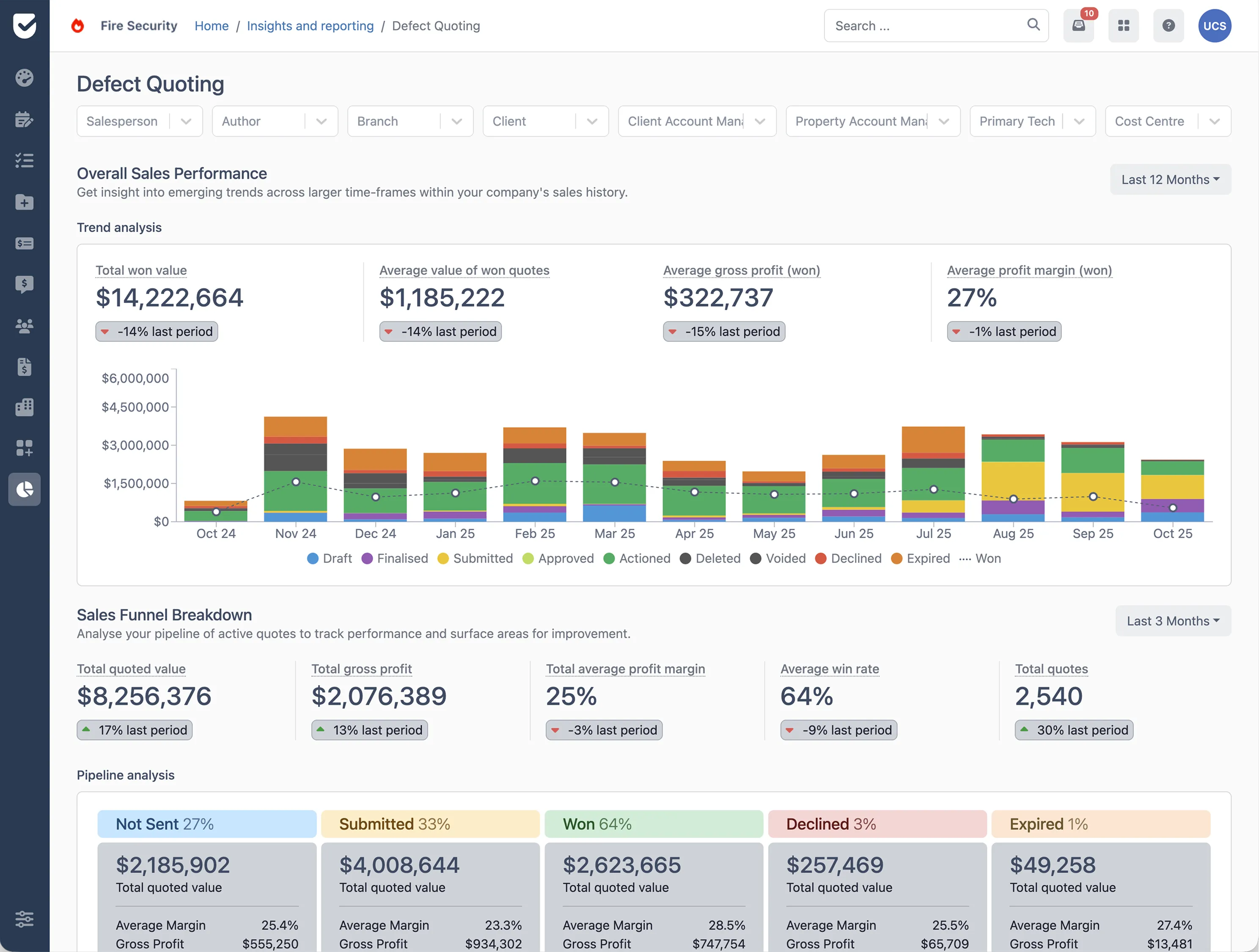
- Defect management and quoting tools to capture issues during inspections and quickly turn them into follow-up work or quotes
- Automated reporting workflows that generate inspection reports from completed field data, reducing delays and manual re-entry
- Integrated invoicing workflows that connect completed inspections directly to billing, helping reduce gaps between work done and work billed
By keeping scheduling, inspections, reporting, and follow-up work connected, Uptick helps fire protection companies reduce missed inspections, improve response times, and deliver a more consistent service experience, which is what ultimately drives both contract retention and new wins.
Book a demo with Uptick to see how it helps fire protection companies manage inspections, improve service delivery, and retain more contracts.